

Kendall Ananyi – How Tizeti Gained Traction – My Facebook Story

Kendall Ananyi
By Kendall Ananyi, Founder, Tizeti
This is the story of an 18-month period that changed everything for Tizeti—the period where we gained serious traction through a partnership between our company, Main One (now acquired by Equinix), and Facebook. It’s a story of bootstrapping, lucky breaks, near-disasters, and the kind of hustle that defines building a startup in Lagos.
Starting from a Rooftop in Yaba
Back in 2015—more than a decade ago now— a customer of Tizeti, Emotu Balogun who was also a founder had encouraged me to take a trip to Yaba and look at expanding outside the Lekki area. He went the extra mile to introduce us to the founders of CcHUB. CCHUB, the innovation hub in Yaba was already connected to Main One’s high-speed fiber optic cable. We needed access to their rooftop to launch a fiber-connected tower that would let us expand our service into the Lagos mainland. We had already covered Lagos Island and were looking for any foothold we could get on the other side.
Here’s the thing: we were completely bootstrapped with zero investors. We didn’t have any money. So when we approached CcHUB, we were genuinely worried they’d ask for rent because landlord with a rooftop suitable for a tower typically charges significant annual rental fee.
HM Bosun Tijani, the founder of CcHUB (who is now Nigeria’s Minister of Communications, Innovation and Digital Economy), gave us access for free. His only ask? That we support a program teaching kids how to code. Coincidentally, two years later, my own daughters went through that same summer coding program. That single act of generosity gave us the foundation we needed to launch on the mainland.
A Hackathon That Changed Everything
Around the same time, the Nigerian Communications Commission’s Universal Service Provision Fund (USPF) was hosting a hackathon at IDEA Hub, right next door to CcHUB. We decided to participate.
The competition was fierce. My co-founder was running the business and I was still moonlighting and we couldn’t be there for the initial screening. We literally coached our team over the phone, telling them what to do. They got through the first stage, and then we showed up to spend the night with them working on our solution.
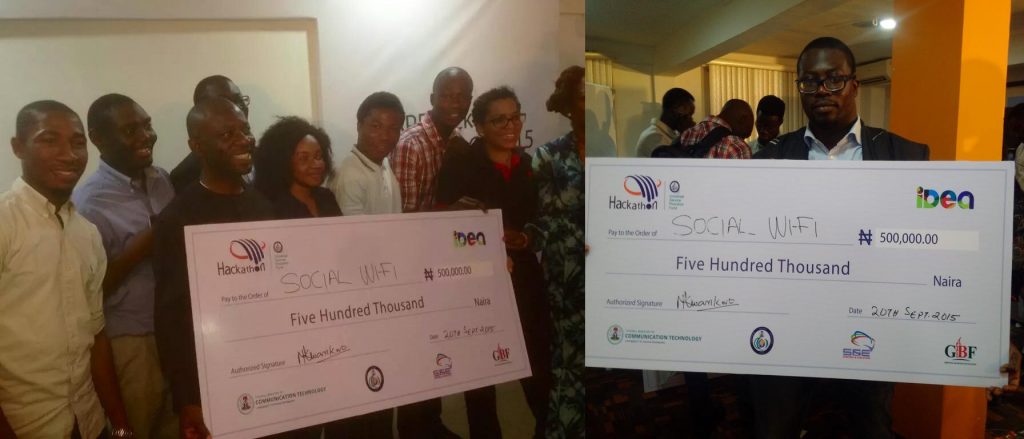
We built what we called Social WiFi—a solution that included voice calling for people in rural areas. When they announced the results and called our name as second runner up, we were happier than the eventual winner. We honestly didn’t think we’d be selected at all.
The prize was 500,000 Naira, significant money at the exchange rate back then. But here’s what mattered more: we split that prize money with the employees who were part of the team. This was one of the key decisions that helped us retain our second batch of employees. Our first hires had already quit within six months, saying “it doesn’t look like this company is going anywhere.” But this second group connected with the vision. Winning that hackathon showed us for the first time that what we were building could actually be impactful.
When Facebook Came Looking
After the hackathon, we kept executing—bootstrapping, building towers on the mainland, taking profits from one tower to fund the next. Then something unexpected happened: Facebook was looking for partners across Africa to expand broadband connectivity, and we got introduced to them.
Let me put this in perspective: we were a tiny company. Our revenue compared to Facebook was… well, it wasn’t even worth comparing. The idea that they would partner with us felt like a dream, not a realistic possibility.
But they kicked of the due diligence process. Our office at the time was this little space in Cherub Mall in Lekki. There was no way we could invite Facebook there, they’d see how small we were and might decide not to partner with us. We agonized over this problem, but we had nothing else to show them.
When the Facebook team finally came to Nigeria, led by Ibrahima Ba, we made a strategic decision: since we couldn’t show them our office, we’d take them to see the tower on the CcHUB rooftop and they’ll visit other offices in the tech ecosystem. This was typical for foreign partners visiting Lagos anyway.
We split up the Facebook team. One group went with the Main One car, and t Ibrahima, came in my car to Yaba. The other half of the Facebook team had gone to visit Andela.
Then something happened that I still can’t believe.
As we got off the Third Mainland Bridge and turned right at a red light, we didn’t think anything was wrong. I’ve driven all over the world, and in most places, you can turn right on a red light. But apparently not there. A group of police officers stopped us immediately and asked us to drive to the police station.
I had Ibrahima from he Facebook team in our car. My heart sank. This due diligence was going terribly wrong.
At the police station, I pleaded with the officers: “We’re the generation of Nigerians trying to solve Nigeria’s problems. We have people from outside the country who’ve come to help and partner with us, and right now we look like we don’t know what we’re doing.”
The female officer said she didn’t realize we had international partners and let us go in less than a minute. I have had increased and immense respect for them since that day. I straightened myself up and walked back to the car, hoping Ibrahima` hadn’t noticed what was happening.
When I got back, he turned to me and said, “Same thing happened to me when I was on vacation.”
That’s when I realized Ibrahima was African. The way he spoke, I’d assumed he was American who’d never been to Africa. But he understood exactly what had just happened and was empathetic.
Thanks to our 2nd runner up finish at the hackathon, we had free entry to IDEA Hub whenever we wanted. So we quickly called ahead, said we were bringing a potential partner, and wanted to show them the startups working there.
That quick thinking allowed us to bring Ibrahima to IDEA Hub, show him around, and keep the momentum going. By the time the Andela group came to meet us at CcHUB, we hadn’t missed a beat.
There’s something special about standing on the rooftop of CcHUB. You can see the entire Lagos mainland spread out before you. The market is right there you can feel it. When Mark Zuckerberg eventually came to Nigeria a few months later, that very tower we showed the Facebook team was where he stood for his first iconic photo.
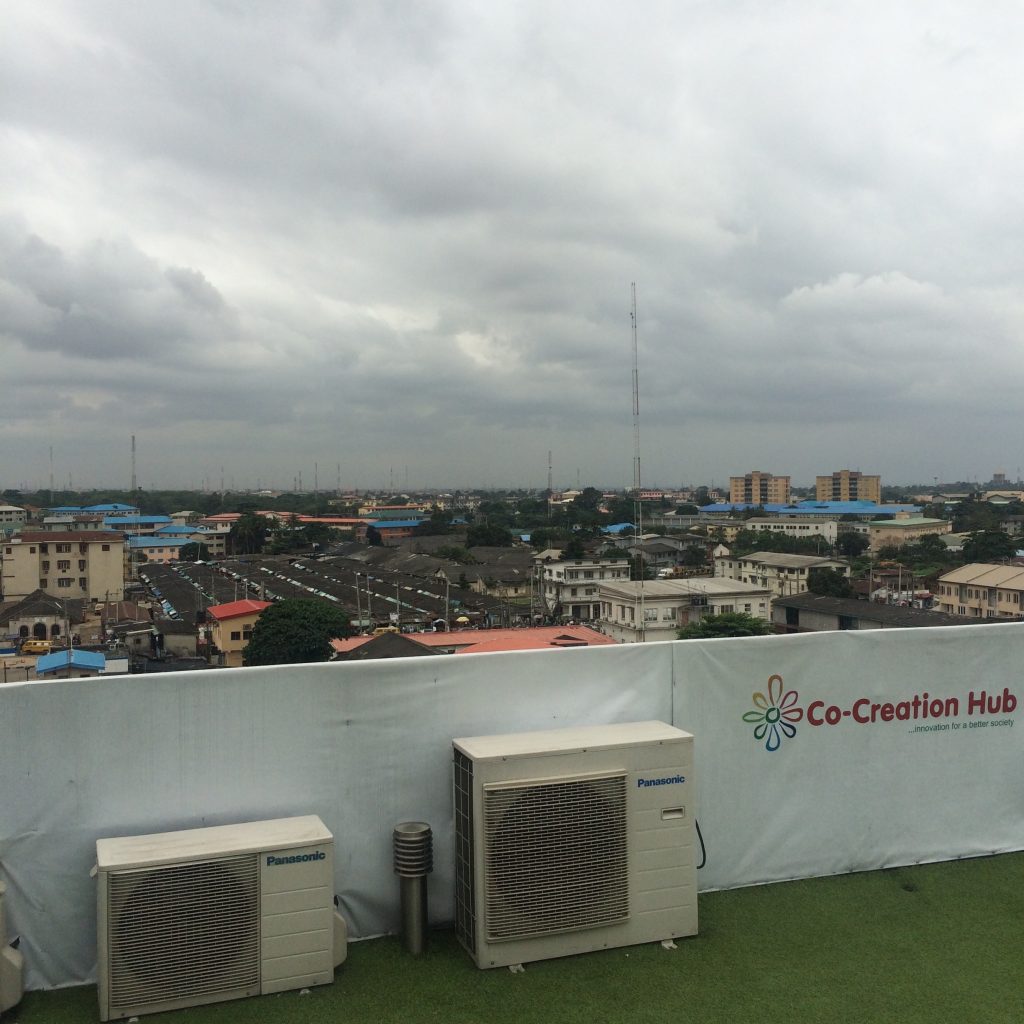
In order to understand how small we were, our mannequin challenge in 2016 (one of the first viral challenges.) was on that rooftop. If you ever need reassurance as a startup founder, just stand on that roof top and tell yourself that all you need is to get $1 every month from every home you can see and you should be able to build a great business!
The Race to Get a Real Office
After the first visit, we didn’t hear from Facebook for a while. But we knew that for the second stage of due diligence, they’d want to see our actual office, there was no way around it this time.
I happened to be visiting a friend who’d just started his own startup. He was sharing office space with someone in Victoria Island who had a beautiful new building. Two floors were still available, and the rent was 6 million Naira per year. That was a lot of money. But we were still bootstrapped. Where would we get the money?
We sent an email to friends, family, and even some of our customers, asking if anyone would be interested in investing. One of my first bosses from my ExxonMobil said he was interested and gave us a small amount. Friends and family came through with the rest. We raised enough to cover two years of rent.
That’s how we got the office just in time for the second Facebook visit.
When the Facebook team arrived for the second visit, they wanted to see our WiFi operations, they had a satellite project they were working on, plus a backup project they hadn’t shared details about yet.
But here’s what made us nervous: when they walked into the office, it looked brand new. Because it was brand new, “How long have you guys been in this office?” It was a passing question, we started second guessing ourselves that maybe they will think maybe this wasn’t even really our office or we had borrowed someone else’s space to impress them? We agonized over it after he left.
We didn’t hear from them after that visit, and we thought we’d blown our chance. They then announced a partnership with another ISP.
The Day Mark Zuckerberg Came to Lagos
Then something unexpected happened. a founder, came all the way from Yaba to visit us at our new office in Victoria Island. He said someone important was coming to Nigeria from Facebook but couldn’t say who. All he said was that it wasn’t a VP, that was all he was allowed to share.
For him to make that trip just to tell us this, we knew something significant was happening. But who could it be?
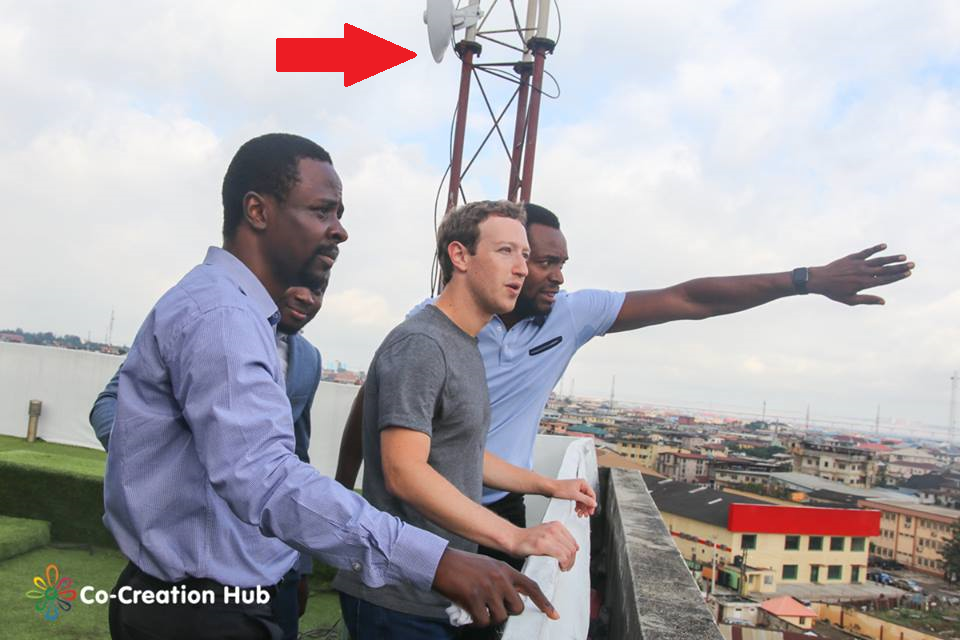
Two days later, I was browsing the internet and saw it: Mark Zuckerberg, founder and CEO of Facebook, was in Nigeria. In Yaba. And the first photo that came out was him standing by our tower at CcHUB.
Most founders in african tech was focusing on trying to meet him, Not us. We took a different approach, I replied an email thread to the Facebook team that had been doing our due diligence, that Mark’s in the country. They were as excited as we were.
One of the things Zuckerberg was going to announce was that Facebook was launching a satellite with SpaceX to bring connectivity to Africa. But unfortunately, that satellite exploded on the launch pad, one of the few SpaceX launches to fail in that way. So there was nothing to announce.
Facebook was ahead of everyone on satellite internet connectivity. A few months after their satellite blew up, SpaceX announced their own internet connectivity project—Starlink.
Paying It Forward took us to Silicon valley
With no word from Facebook after the second visit, I started thinking maybe we should go to Silicon Valley ourselves to try to close the partnership, since the satellite had blown up and they surely must be looking for alternatives, we might still have a chance.
Earlier in the year, I was doing something that’s always been important to me: paying it forward. I’d just made my first angel investment in a startup called Paystack. Months later after the investment and a few weeks following Zuckerberg’s visit, Shola from Paystack reached out to tell me that one of his investors, Y Combinator, was sending people to visit Nigeria .
They were holding an event at Lagos Business School, and I offered to provide free WiFi, even though we didn’t have infrastructure there. We had just a few days to extend connectivity from our nearest point of presence to the venue. We got it done.
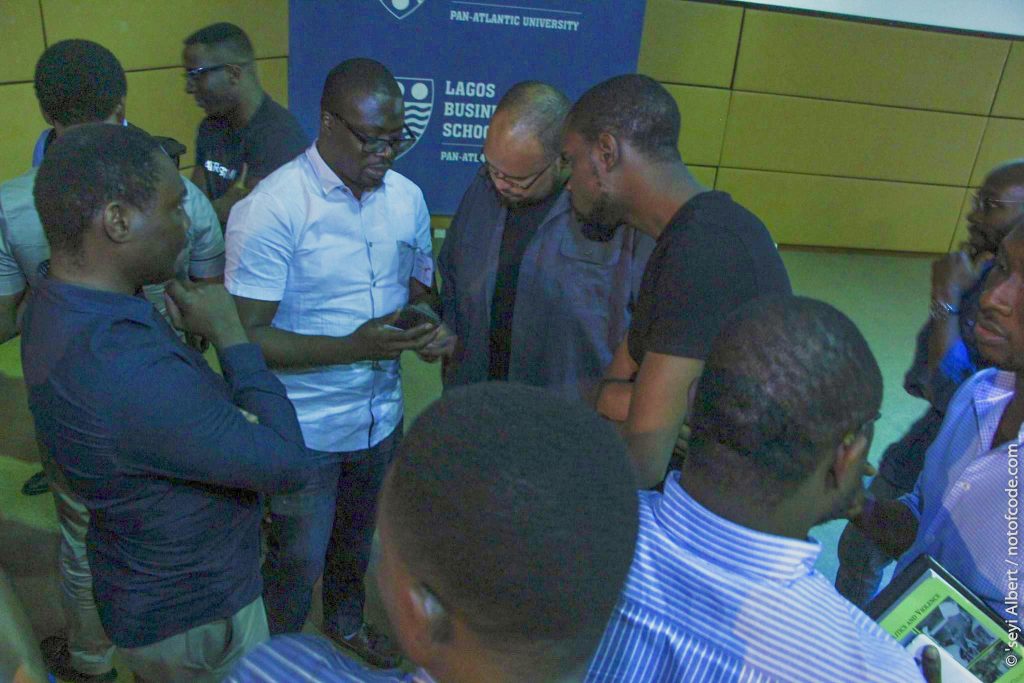
Michael Seibel, who was CEO of YC Core at the time, had been struggling with internet connectivity throughout his visit to Nigeria. When he came to the event, he could finally stay connected. Because we were one of the organizers, I was able to walk up to him on stage right after his talk.
I told him we were the ones who provided the internet for the event and gave him a quick demo. He ran a speed test on his phone and was blown away—above 20 Mbps. He wanted to know how we’d gotten connectivity into that location so quickly. We explained, and he kept asking the same question: “How big can this get?”
At the time, I didn’t think that big. I was just trying to run my business. We were bootstrapping, not thinking about massive scale. But he encouraged us to apply to Y Combinator.
Bootstrapping Our Way to the Valley
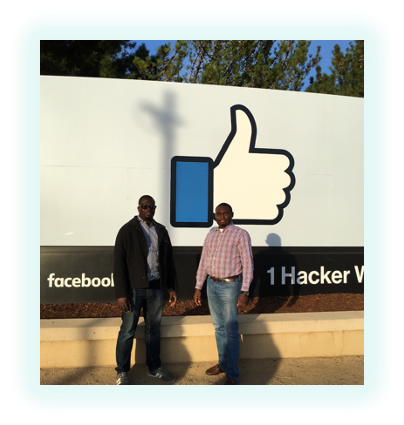
We got selected for the YC interview in Silicon Valley. For us, though, Y Combinator wasn’t the main reason to go. We knew that with Facebook’s satellite destroyed, they needed alternative connectivity partners—and we were a possible option. Going to California meant we could meet with the Facebook team in person at their Menlo Park office.
But here’s the reality of bootstrapping: all the money you make in one month, you use the next month. Flight tickets for two people to California wasn’t something our business could just absorb.
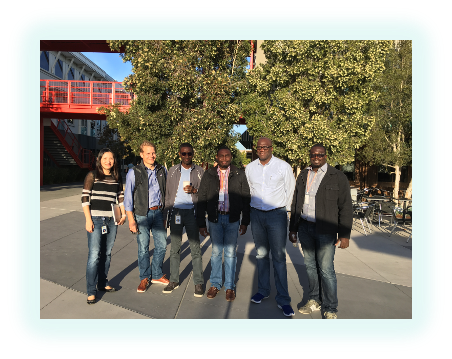
We had a philosophy that’s kept us alive for over 13 years now: pay staff first, then vendors, then pursue growth objectives, and pay ourselves last. So I agreed in an email with my co-founder, Ifeanyi saying: if we can pay our staff this month, pay our vendors, and still have enough left over for the flights, we’ll make it to Silicon Valley.
That’s exactly what happened. We booked our tickets and scheduled the Facebook meeting at their Menlo Park office for the day after our YC interview. We picked one of the earliest interview slots specifically so we’d have time to prepare for the Facebook meeting—that was the main event for us.
The Longest Day: Almost Missing Demo Day
We got into Y Combinator. We met with Facebook. Everything seemed to be falling into place. But then the real drama started.
Because we were a licensed ISP in Nigeria, we needed regulatory approval before we could change our shareholding in any way—which was required to incorporate in Delaware as a US company, which was required to receive the YC investment.
We thought the approval would take one week. It turned into two weeks. Then a month. By the first month, when our rent was due in the Bay Area, we still hadn’t received the YC investment. We were running costs in one of the most expensive places in the world, with the business barely supporting us back home.
Everyone kept congratulating us, thinking we were having the time of our lives. But we didn’t have the YC money yet.
Two weeks before Demo Day, YC informed us that if we didn’t get the regulatory approval, we couldn’t demo. With 14 days left, we still didn’t have it.
We finally got approval 24 hours before Demo Day—the day before. We received the YC investment of $120,000 just in time.
But that week was brutal. The mental strain was enormous. Even as we rehearsed our pitch, we weren’t sure we’d actually get to deliver it. We went through YC and had to grow without actually having the YC investment. Well now we have it so everything should be fine right ?
Almost Blowing the Facebook Partnership
During our preparation for Demo Day, we debated whether to mention the Facebook partnership. We hadn’t started execution yet, and it so We couldn’t announce it publicly.
But in discussions with our batchmates during rehearsal, we decided we had to reference it somehow, it was the one thing that showed our traction and validated our work. We just wouldn’t name the company specifically. Our batch was the first batch YC was experimenting with having more than 1 NIgerian startup…we had 6 African startups all at once. We were also the the batch YC was expanding globally so multiple startups from India, Mexico and South America, Silicon Valley doesn’t really like hardware…We were a hardware startup from Africa = Low probability of raising any funding. We needed something to stand out.
On stage, I said: “We have a partnership with the largest social media company in the world.”
In my mind, that could be anyone. Surely nobody would immediately know it was Facebook, right?
Literally two minutes after I stepped off stage, my phone started buzzing. I looked at the number, it was from Facebook. My heart stopped.
An article had been written on TechCrunch that included the partnership. This was a crisis. We’d announced the partnership ahead of the official launch, and might have jeopardized it. I couldn’t even think straight. Remember we had just completed 3 crazy months of growing in a batch with everyone had $120k We had just only gotten our YC funding a day before and now we had to deal with this instead of pitching investors on Demo day.
I reached out to our YC partners immediately. Sam Altman, who was CEO of YC ( now CEO of OpenAI) at the time, swung into action. He contacted TechCrunch directly and asked them to remove that line from the article. Press outlets generally don’t retract anything, ever. But the TechCrunch team graciously agreed because, as they put it, “I’m making an exception here because getting the deal has the potential to help bring a lot of people into the knowledge economy“
They pulled the line. We called back the Facebook team the next day and everything was back to normal…except my mental health 🙂 .
October 2016: The Month Everything Changed
October 2016 is the month I’ll never forget. We got both the Facebook partnership and got into Y Combinator. The very next day after Demo Day, with word already spreading around the Valley about our company, we raised $2 million in the shortest raise I’ve ever seen.
We took that capital, combined it with the Facebook and Main One partnership, and scaled our business from that rooftop in Yaba.
At the time we signed the Facebook partnership, our total bandwidth capacity was 100 megabits per second. Today, we’ve grown to 100 gigabits per second—a 1,000x increase over a decade.
What can you learn from this
Start with whatever you can get. Product-market fit rarely begins in perfect conditions. It begins wherever someone gives you a chance.
Generosity compounds. CcHUB gave us a rooftop for free. Years later, we paid it forward with free internet for YC’s visit to Lagos. Both decisions changed our trajectory.
Share wins with your team early. Splitting that hackathon prize with staff built loyalty when we had nothing else to offer. Early culture decisions outlive early capital.
Never let your current size limit your ambition. We were tiny compared to Facebook, but we showed up like partners. Large companies partner with execution, not just scale.
Founders must manage perception as much as reality. Office space, due diligence, and first impressions matter. Sometimes survival requires creating credibility before you fully have it.
Luck only works if you’re already executing. Facebook didn’t find us randomly. We were building towers, serving customers, and winning small competitions before the opportunity appeared.
Speed is a competitive advantage in emerging markets. Extending connectivity in days for YC’s visit created a moment that changed our future. Execution speed beats perfect planning.
Always pay it forward. My best partnerships and investments came from helping others without expecting anything back. Ecosystems reward contributors.
Protect partnerships like your life depends on them. One sentence on a Demo Day stage almost destroyed our Facebook deal. In high-stakes moments, discipline matters.
Bootstrap discipline builds resilience. Paying staff first, vendors second, and ourselves last kept us alive long enough to reach product-market fit.
When momentum finally hits, move fast. October 2016 changed everything because we were ready to scale when opportunity arrived.
Product-market fit is rarely a single moment. It’s a chain of small breaks, near-failures, and persistence that eventually compounds into traction.
The real lesson: keep building long enough for luck to find you — and be ready when it does
The next chapter? We’re building fiber to everyone at FreeFiber.Africa. We are at the exact same spot we were but now building Fiber in the Lagos Mainland. Here we go ahead….
Hmmmmm what a read!!
Both inspiring, suspense, thrilling and rewarding. Big take-aways for me….. Reward staff/team first, Vendors Second, Growth objectives third, then self last. ….thanks for pouring out 20 years into this article. I know our story will transcend likewise.